Weaning Guide for UK Parents: Where to Start, Plus 12 Baby Food Maker Recipes | BooBoo
Weaning Your Baby: The Complete UK Guide
Everything you need to start your baby on solid foods with confidence, from the first spoonful of broccoli to chopped family meals. Written around NHS guidance, with 12 baby food maker recipes you can batch cook in an afternoon.
A quick note. This guide is written to sit alongside NHS advice, not to replace it. Every baby is different, and your health visitor knows yours. If anything here does not match what you have been told, follow your health visitor or GP.
1. Where to start with weaning
Weaning, also called introducing solid foods or complementary feeding, is the point where your baby starts eating food alongside their usual milk. The NHS advises starting when your baby is around 6 months old. Before that, breast milk or first infant formula gives them everything they need.
It is a big milestone and it can feel like there is a lot to get right. There is not, really. Weaning is mostly repetition, mess and patience. The first few weeks are about your baby learning that food exists, not about how much they eat.
The three signs your baby is ready
The NHS lists three signs that usually appear together at around 6 months. Look for all three, not just one:
They can stay in a sitting position and hold their head steady.
They can coordinate their eyes, hands and mouth, so they can look at food, pick it up and put it in their mouth by themselves.
They can swallow food rather than pushing it straight back out with their tongue.
Three signs that are not readiness signs
These three are very commonly mistaken for "she's ready for food", and they catch out almost every parent. They are all completely normal baby behaviour:
Chewing their fists
Wanting extra milk feeds
Waking in the night more than usual
Starting solids earlier will not make your baby sleep through. If you think your baby might be ready before 6 months, talk to your health visitor first. Solid foods should never be given before 4 months.
What you actually need
Less than the shops would like you to think. The NHS suggests:
A high chair that lets your baby sit upright with good support
Soft weaning spoons, gentler on new gums than metal
Plastic bowls, ideally with a suction base
A free flow open cup or beaker without a non spill valve
Ice cube trays or small pots for freezing portions
Bibs and a messy mat, because the floor is going to get it
Something to cook and puree with, whether that is a pan and a hand blender or an all in one baby food maker
Your first week, realistically
Offer a small amount of solid food once a day, at a time that suits you both. Pick a moment when your baby is not overtired and not ravenous. Straight after a milk feed often works well, because a hungry baby has very little patience for a spoon.
The NHS recommends starting with single vegetables that are not sweet, such as broccoli, cauliflower or spinach. Starting with vegetables rather than fruit helps your baby get used to a wider range of flavours rather than expecting everything to taste sweet.
A teaspoon or two is a full meal at this stage. Milk is still doing the heavy lifting. And expect rejection: the NHS notes it may take 10 tries or more for a baby to get used to a new food, flavour or texture. A screwed up face is not a no forever, it is a no today.
The single most useful mindset shift. For the first month or so, you are not feeding your baby. You are introducing them to food. Let your baby guide you on how much they need, and never force them to eat. If they turn away, mealtime is over. Try again tomorrow.
Purees or baby led weaning?
Both work, and most families end up somewhere in the middle. Spoon fed purees give you control over texture and make it easy to build up from smooth to lumpy. Baby led weaning means offering soft finger foods from the start and letting your baby feed themselves.
You do not have to choose a camp. A very common and very sensible approach is purees for the first few weeks while your baby learns to swallow, with soft finger foods offered alongside from early on so they get practice picking things up and biting. The NHS is clear that you should move on from purees to mashed and finger foods as soon as your baby can manage them, so smooth textures are a starting point rather than a destination.
2. The three stages of weaning
Here is how the first six months of eating usually progresses, based on NHS guidance for each age band. Use it as a map, not a timetable. Babies move at their own pace.
Stage
Texture
Meals per day
What it looks like
Stage 1 Around 6 months
Smooth puree, then soft mash
Start with 1, build towards 2 to 3
Single vegetables, then simple pairs. A few teaspoons. Soft finger foods offered alongside. Milk feeds unchanged.
Stage 2 7 to 9 months
Mashed and lumpy, plus finger foods
Moving towards 3 meals
Iron rich proteins matter now. Meat, fish, eggs, beans and lentils. Lumps are a skill worth pushing on with.
Stage 3 10 to 12 months
Mashed, lumpy, chopped and finger foods
3 meals a day plus milk feeds
Bigger chunks of soft food, wider variety, eating what you eat where possible. Using a cup with confidence.
Stage 1: around 6 months
Start with one small amount of solid food a day. Non sweet vegetables first: broccoli, cauliflower, spinach, courgette, leek. Then bring in root vegetables and fruit, and start pairing flavours. Move from smooth purees on to mashed food as soon as your baby is managing it.
Milk stays your baby's main source of nutrition throughout this stage. Offer milk feeds after solids, since small stomachs fill quickly.
Stage 2: 7 to 9 months
This is the stage that matters most for texture. The NHS advice is to move your baby on to mashed, lumpy foods and finger foods as soon as they can manage them. Babies take different amounts of time to get used to lumps, but it is an important skill and one that gets harder to introduce the longer it is left.
Iron is the other headline. Babies are born with iron stores that start running down from around 6 months, so protein foods that carry iron and zinc become genuinely important: red meat, chicken, oily fish, eggs, beans and lentils. Formula fed babies typically need around 600ml of formula a day at this stage, though that is a guide rather than a target.
Stage 3: 10 to 12 months
Three meals a day alongside milk feeds. Lunch and tea can each have a main and a pudding such as fruit or plain yoghurt. Your baby should be handling mashed, lumpy, chopped and finger foods from all the food groups, and finding it easier to pick up small pieces and feed themselves.
If you are formula feeding, around 400ml a day is a rough guide at this point. Babies under 12 months do not need snacks. If your baby seems hungry between meals, the NHS suggests offering extra milk instead.
Eat together whenever you can. Babies learn a huge amount about food by watching you eat it.
3. Using your BooBoo baby food maker for weaning
A baby food maker is not essential for weaning. It is, however, the difference between homemade baby food being a lovely idea and homemade baby food being something you actually keep doing at 7pm on a Wednesday.
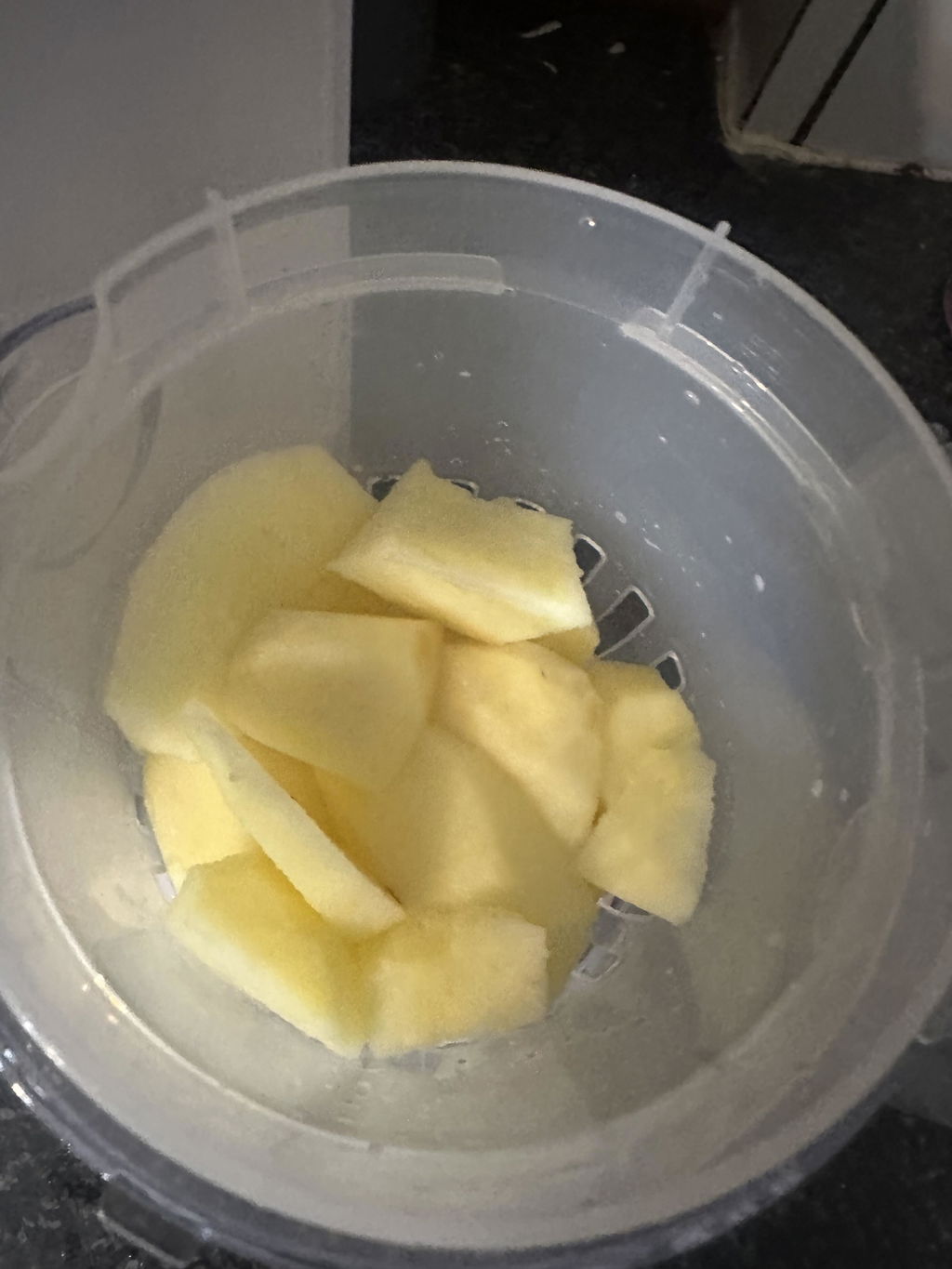
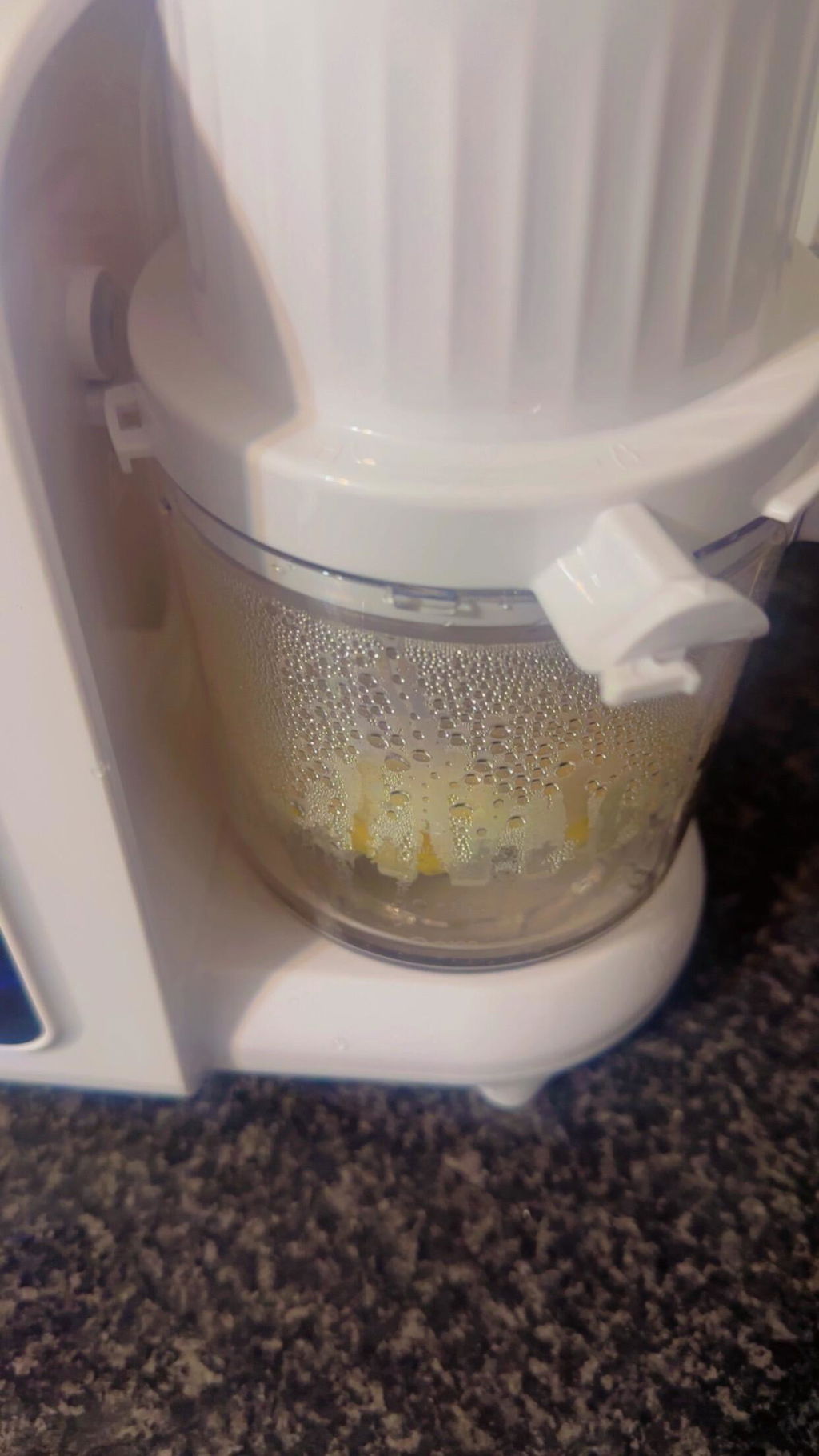
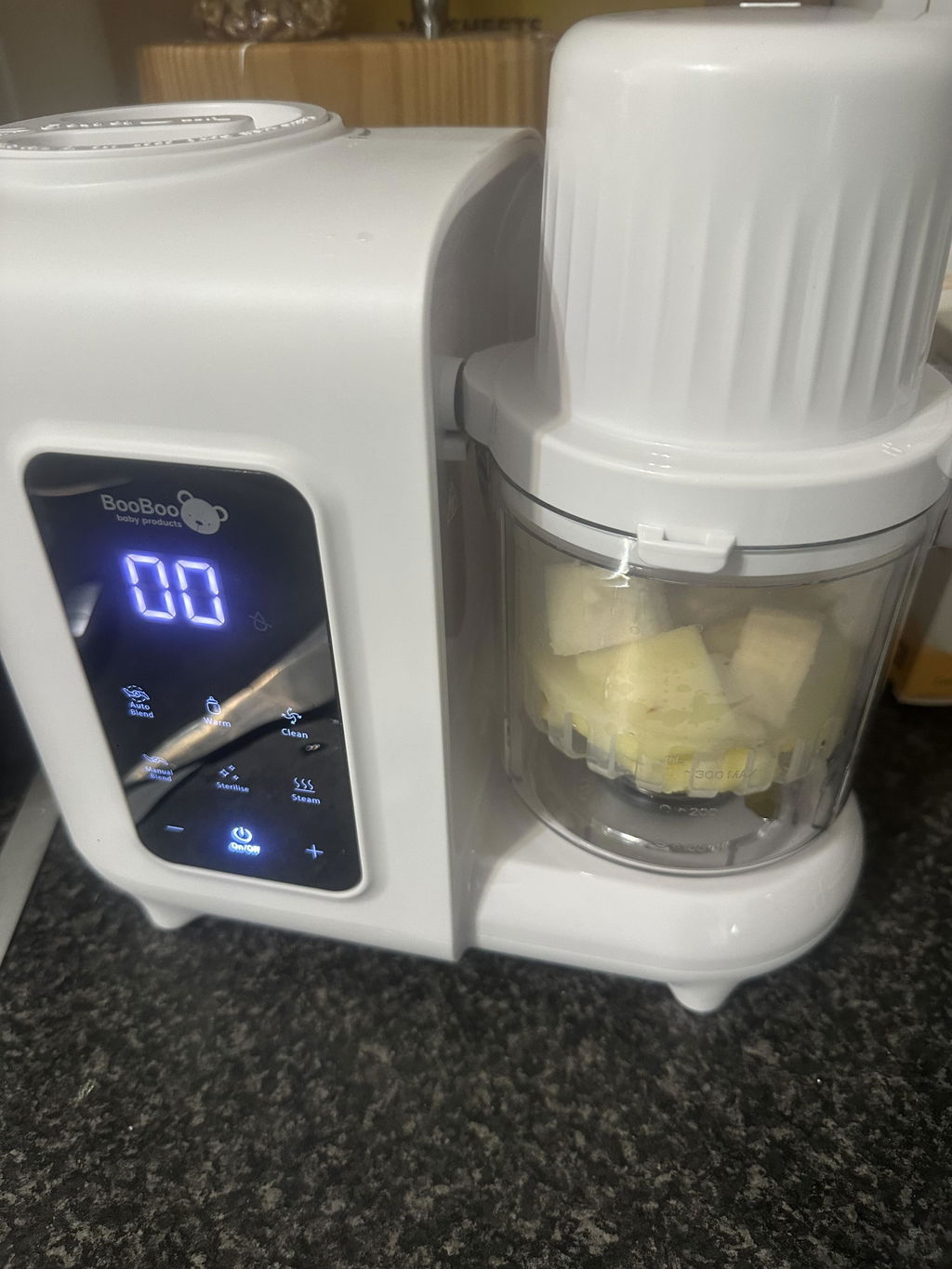
The PuréePro steams and blends in the same jug, which means no transferring hot food between pans and blenders, one thing to wash instead of four, and total control over how smooth or lumpy the result is.
Steaming keeps more of the good stuff in
Boiling vegetables leaves a lot of the water soluble vitamins in the water, which then goes down the sink. Steaming keeps more of them in the food. It also softens vegetables evenly, which matters when you are trying to get a lump free puree for a 6 month old.
How to use it at each stage
The important thing to understand is that the blend time, not the machine, controls the texture. Same ingredients, same steam cycle, different result:
Stage
How to blend
Result
Stage 1, around 6 months
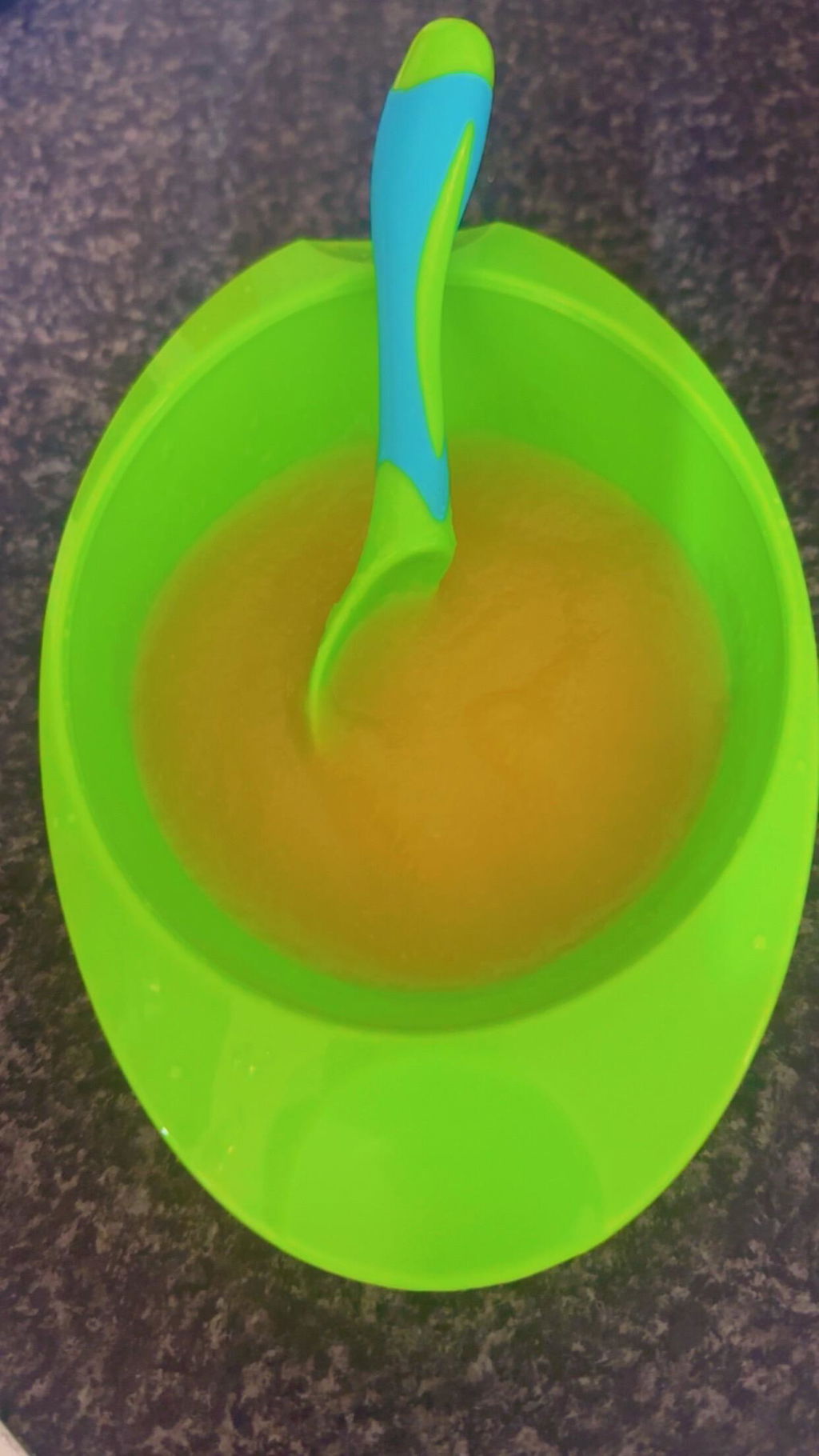
Blend continuously for 30 to 60 seconds, adding cooking liquid a spoonful at a time
Completely smooth, drops slowly off a spoon
Stage 2, 7 to 9 months
Two or three short pulses only, or blend half and stir it back through the unblended half
Thick with soft lumps to chew on
Stage 3, 10 to 12 months
Steam only, then chop or mash with a fork. Use one quick pulse for sauces
Chopped, soft pieces your baby can pick up
Steam time guide
Times are a guide for pieces cut to roughly 2cm. Always check food is properly soft before blending, and always check meat, poultry and fish are cooked all the way through. Check your instruction manual for your model's water levels and cycle settings.
Always test the temperature. Freshly steamed food is hotter than it looks and heat pockets are common. Stir it thoroughly, then test a little on the inside of your wrist before it goes anywhere near your baby.
The Sunday afternoon batch cook
This is where a food maker earns its place on the worktop. One session gives you a fortnight of meals:
Pick three or four ingredients that steam in a similar time. Sweet potato, carrot and butternut squash, for example.
Steam and blend each one separately so you keep single flavours you can combine later.
Cool within one to two hours, then spoon into ice cube trays.
Freeze, then pop the cubes into labelled freezer bags with the food and the date on them.
At mealtimes, defrost one or two cubes and mix and match. Carrot plus apple. Broccoli plus potato. Sweet potato plus a cube of chicken.
One ice cube is roughly one starter portion at 6 months, and two to three cubes is a reasonable meal by 9 months.
Beyond purees
The PuréePro is a 5 in 1, so it keeps earning its space after weaning is over. Use the steam function for vegetables for the whole family, the sterilise function for bottles, dummies and small accessories, the bottle warming function for night feeds, and the self clean cycle to save yourself the fiddly bits.
Already have your PuréePro?
Register your 12 month warranty and get lifetime product support from our UK based customer care team. If you are missing your manual or a spare part, we can help with that too.
Four recipes for each stage, all written for a steam and blend baby food maker. No added salt, no added sugar, and no honey before 12 months. Each one freezes well unless noted.
Stage 1: around 6 months
Smooth, single flavours and simple pairs. Start with the vegetable ones.
1. Broccoli and Cauliflower Puree
Prep 5 mins
Steam 12 to 15 mins
Makes 6 to 8 cubes
Freezes well
Ingredients
150g broccoli florets
150g cauliflower florets
Cooking water from the steamer, to loosen
Method
Cut the florets to roughly even 2cm pieces so they cook at the same rate.
Steam for 12 to 15 minutes, until a knife goes through with no resistance.
Blend for 45 to 60 seconds, adding the cooking water a tablespoon at a time until it is completely smooth.
Cool, then test the temperature before serving.
Why this one first: the NHS suggests starting with vegetables that are not sweet. Broccoli and cauliflower are the classic first pairing, and getting them in early makes green vegetables far less of a battle later on.
2. Sweet Potato and Carrot Puree
Prep 5 mins
Steam 15 to 20 mins
Makes 8 to 10 cubes
Freezes well
Ingredients
1 medium sweet potato (around 200g), peeled and cut into 2cm cubes
2 medium carrots (around 150g), peeled and cut into 2cm rounds
Method
Add the sweet potato and carrot to the steaming basket.
Steam for 15 to 20 minutes until both are completely soft.
Blend to a smooth puree, loosening with cooking water. Sweet potato thickens as it cools, so go slightly looser than you think.
Cool and test before serving.
Tip: this one is naturally sweet and very well accepted, which makes it a useful base to hide a less popular vegetable in later.
3. Butternut Squash and Pear Puree
Prep 8 mins
Steam 15 to 18 mins
Makes 8 cubes
Freezes well
Ingredients
250g butternut squash, peeled, deseeded and cubed
1 ripe pear, peeled, cored and chopped
Method
Steam the butternut squash for 10 minutes on its own.
Add the pear and steam for a further 5 to 8 minutes.
Blend until silky smooth, adding cooking water as needed.
Cool and test before serving.
Tip: a ripe pear needs barely any cooking. Adding it late stops it turning watery.
4. Courgette, Pea and Mint Puree
Prep 5 mins
Steam 8 to 10 mins
Makes 6 cubes
Freezes well
Ingredients
1 medium courgette (around 200g), chopped
100g frozen peas
2 fresh mint leaves
Method
Steam the courgette for 5 minutes, then add the frozen peas and steam for a further 3 to 5 minutes.
Add the mint leaves and blend until smooth. Pea skins need a little longer, so give it a full minute.
Cool and test before serving.
Why herbs matter: you cannot add salt to baby food, but you can absolutely add flavour. Mint, basil, cinnamon and mild spices are all fine from 6 months and build a much broader palate.
Stage 2: 7 to 9 months
Thicker, lumpier, and now with iron rich proteins. Pulse rather than blend.
5. Chicken, Sweet Potato and Apple
Prep 10 mins
Steam 18 to 20 mins
Makes 4 portions
Freezes well
Ingredients
1 small chicken breast (around 150g), cut into 2cm pieces
1 small sweet potato (around 150g), peeled and cubed
1 eating apple, peeled, cored and chopped
A pinch of dried thyme
Method
Add the chicken and sweet potato to the steaming basket and steam for 15 minutes.
Add the apple and thyme and steam for a further 5 minutes. Check the chicken is cooked all the way through with no pink remaining.
Pulse two or three times only. You want a thick, soft, slightly textured mix, not a puree.
Cool, test the temperature and serve.
On texture: if your baby is new to lumps, blend two thirds smooth and stir the chopped third back through. It is a gentler step up.
6. Red Lentil, Carrot and Cumin Dhal
Prep 5 mins
Cook 25 mins
Makes 5 portions
Freezes well
Ingredients
100g red lentils, rinsed thoroughly
2 carrots, peeled and chopped
Quarter of a teaspoon of ground cumin
300ml water or unsalted vegetable stock
Method
Simmer the lentils and carrots in the water for 20 to 25 minutes, until the lentils have collapsed and the carrots are completely soft.
Stir in the cumin.
Pulse briefly for a thick, soft dhal. Leave some texture.
Cool and test before serving.
Iron note: lentils are a strong plant source of iron. Serving them with a vitamin C food such as a few pieces of soft pepper or some fruit afterwards helps the body absorb more of it.
7. Salmon, Broccoli and Potato Mash
Prep 8 mins
Steam 15 mins
Makes 4 portions
Freezes well
Ingredients
1 skinless, boneless salmon fillet (around 120g)
1 medium potato (around 150g), peeled and cubed
100g broccoli florets
1 tablespoon of your baby's usual milk, to loosen
Method
Steam the potato for 5 minutes, then add the broccoli and salmon and steam for a further 10 minutes.
Check the salmon flakes easily and check very carefully for bones. Flake it with your fingers before it goes in the jug.
Mash by hand or pulse once. Loosen with the milk if it needs it.
Cool and test before serving.
Fish and weaning: oily fish like salmon is a good source of omega 3. Fish is one of the allergen foods, so introduce it on its own first, in a small amount, on a day when you can keep an eye on your baby.
8. Beef, Butternut and Tomato Ragu
Prep 10 mins
Cook 30 mins
Makes 5 portions
Freezes well
Ingredients
150g lean beef mince
200g butternut squash, peeled and cubed
200g chopped tomatoes, no added salt
Half a small onion, finely chopped
A pinch of dried oregano
Method
Steam the butternut squash for 15 minutes until soft, then set aside.
Brown the mince and onion in a pan with a little olive oil, then add the tomatoes and oregano and simmer for 15 minutes.
Add the squash and mash everything together, or pulse once for a slightly finer texture.
Cool and test before serving. Lovely stirred through soft, well cooked small pasta shapes.
Iron note: red meat is one of the most easily absorbed sources of iron there is, and iron matters from around 6 months. Buy the leanest mince you can and check tinned tomatoes for added salt.
Stage 3: 10 to 12 months
Chopped, chunky and hands on. Your baby is feeding themselves now.
9. Mini Veggie Frittata Fingers
Prep 10 mins
Cook 20 mins
Makes 12 fingers
Freezes well
Ingredients
4 British Lion stamped eggs
100g courgette, grated
50g frozen peas, defrosted
30g grated mild pasteurised cheddar
Method
Heat the oven to 180C fan.
Steam the courgette and peas for 5 minutes, then pulse once so they are finely chopped.
Beat the eggs, stir in the vegetables and cheese, and pour into a lined small baking tin.
Bake for 18 to 20 minutes until fully set and firm in the middle. Both the white and the yolk must be solid.
Cool completely, then cut into finger sized strips your baby can grip.
Egg safety: the NHS advises that only British Lion stamped eggs are safe to serve raw or lightly cooked. Any other egg needs to be cooked until both white and yolk are solid, which is what this recipe does anyway.
10. Chunky Chicken, Leek and Potato Stew
Prep 10 mins
Cook 25 mins
Makes 4 portions
Freezes well
Ingredients
1 chicken breast (around 150g), cut into small pieces
1 small leek, washed well and sliced
2 medium potatoes, peeled and cubed
200ml unsalted chicken or vegetable stock
A pinch of dried thyme
Method
Steam the chicken and potato for 15 minutes, adding the leek for the last 8 minutes.
Check the chicken is cooked through with no pink remaining.
Do not blend. Chop the chicken into small, soft pieces roughly the size of your fingernail and mash about half the potato to thicken.
Stir in enough warm stock to make it spoonable, cool and test before serving.
Tip: this is a good one to make a double batch of. The adult half just needs seasoning after you have taken the baby portion out.
11. Hidden Veg Pasta Sauce
Prep 10 mins
Cook 25 mins
Makes 6 portions
Freezes well
Ingredients
1 red pepper, deseeded and chopped
1 carrot, peeled and chopped
1 small courgette, chopped
200g chopped tomatoes, no added salt
1 small clove of garlic
A pinch of dried basil
Method
Steam the pepper, carrot and courgette with the garlic for 15 minutes until everything is soft.
Add the tomatoes and basil and blend until completely smooth.
Simmer in a pan for 5 minutes to thicken if it is too loose.
Stir through soft, well cooked small pasta shapes. Cool and test before serving.
Worth the effort: this freezes in cubes and turns any pasta, rice or couscous into a meal in three minutes. It is also the recipe most families tell us they are still making a year later.
12. Banana and Oat Breakfast Fingers
Prep 10 mins
Cook 20 mins
Makes 10 fingers
Freezes well
Ingredients
2 very ripe bananas
150g porridge oats
50g blueberries, halved
1 British Lion stamped egg
Half a teaspoon of ground cinnamon
Method
Heat the oven to 180C fan.
Blend the bananas, oats, egg and cinnamon into a thick batter.
Stir in the halved blueberries by hand.
Spread into a lined tin and bake for 18 to 20 minutes until firm and golden.
Cool completely and cut into finger sized strips.
No added sugar: the sweetness comes entirely from ripe banana. The NHS is clear that babies do not need sugar, and starting without it makes life much easier later.
5. Introducing allergens safely
This is the part that worries most parents, and the advice has changed considerably in recent years. Current NHS guidance is that delaying allergenic foods does not protect against allergy, and may increase the risk. Peanuts and eggs in particular should be introduced from around 6 months, not held back.
The three rules
One at a time. Introduce allergenic foods one at a time and in very small amounts, so if there is a reaction you know exactly what caused it.
Keep going. Once a food has been introduced and tolerated, keep offering it as a regular part of your baby's diet. Introducing peanut butter once and then never again does not build tolerance.
Pick your moment. Offer a new allergen earlier in the day, at home, when you can watch your baby for a few hours afterwards. Not at 6pm on the way out the door.
Speak to your GP or health visitor first if your baby has a diagnosed food allergy, has eczema, or if there is a family history of allergies, eczema, asthma or hay fever. They may want you to introduce allergens in a specific way.
What a reaction looks like
A mild reaction can include a rash, itchy throat or tongue, swollen lips, a runny or blocked nose, coughing, wheezing, vomiting or diarrhoea. Stop offering that food and speak to your GP.
Anaphylaxis is a medical emergency. If your baby has swelling of the mouth or throat, difficulty breathing, noisy breathing, becomes floppy, pale or unresponsive, call 999 immediately. Severe reactions are rare, but they need urgent help.
Allergen introduction tracker
Print this and stick it on the fridge. Tick each food off as you introduce it, note the date, and write down anything you noticed. It is genuinely useful to have this written down if you ever need to talk to a GP about a suspected allergy, and it stops the "have we done sesame yet?" conversation entirely.
Allergen food
How to offer it
Date first tried
Any reaction?
Cow's milk
In cooking only, or as full fat yoghurt or cheese. Not as a main drink before 12 months
Egg
Well cooked until white and yolk are solid, unless British Lion stamped
Peanut
Smooth peanut butter thinned with milk or water, or ground. Never whole nuts
Tree nuts (almond, cashew, walnut)
Ground or as a smooth nut butter. Never whole
Sesame
Smooth tahini stirred into food, or houmous
Wheat and gluten
Toast fingers, pasta, cereal with no added sugar or salt
Soya
Tofu, or soya yoghurt
Fish
Cooked and flaked, checked very carefully for bones
Shellfish
Thoroughly cooked only, never raw or lightly cooked
Celery
Well cooked and soft, in a stew or sauce
Mustard
A very small amount stirred into a sauce
Molluscs (mussels, squid)
Thoroughly cooked only
Lupin
Occasionally found in some breads and pastries, check labels
Sulphites
Found in some dried fruit and processed foods, check labels
The first nine are the foods the NHS highlights as most likely to cause a reaction in babies. The last five complete the 14 allergens that must be declared on food labelling in the UK, so they are worth knowing about even though reactions to them in babies are less common.
6. Foods to avoid
A short list, and worth knowing properly. This follows NHS guidance on foods to avoid giving babies and young children.
Avoid
Until
Why
Salt and salty foods such as bacon, sausages, crisps, crackers, gravy and ready meals
Keep to a minimum throughout childhood
Babies' kidneys cannot cope with much salt. Never add salt to your baby's food or cooking water.
Sugar and sugary drinks
Not needed at all
Causes tooth decay, and babies do not need it. Naturally sweet fruit and vegetables do the job.
Honey
12 months
Can occasionally contain bacteria that produce toxins in a baby's intestines, causing infant botulism. This applies to raw and cooked honey.
Whole nuts and peanuts
5 years
Choking risk. Ground nuts and smooth nut butters are fine from around 6 months.
Mould ripened soft cheeses such as brie and camembert, ripened goats' cheese and soft blue cheese
Check with your health visitor
Listeria risk. Pasteurised hard cheeses and full fat cream cheese are fine from around 6 months.
Raw or lightly cooked eggs that are not British Lion stamped
Cook them fully
Salmonella risk. Both white and yolk must be solid.
Rice drinks
5 years
Arsenic content. Should not be used as a substitute for breast milk or infant formula.
Shark, swordfish and marlin
16 years
Mercury levels can affect nervous system development.
Raw or lightly cooked shellfish
Cook it thoroughly
Food poisoning risk.
Raw jelly cubes
Follow pack instructions
Choking risk.
High saturated fat foods such as crisps, biscuits and cakes
Limit
Check labels and choose lower saturated fat options where you can.
Do not use low fat versions. Babies and toddlers need the energy that full fat dairy provides. Full fat yoghurt, full fat cheese and whole milk in cooking are the right choices under 2.
7. Choking and gagging: knowing the difference
Almost every parent has a moment in the first month of weaning where they think their baby is choking and it turns out to be gagging. Knowing which is which takes a lot of fear out of the process.
Gagging
Choking
Loud. Retching, coughing, spluttering, watery eyes, tongue pushed forward. Your baby is dealing with it.
Quiet. Very little sound because the airway is blocked. Skin, gums, inside of the lips or fingernails may look blue or grey.
A normal, protective reflex. It is how babies learn to manage how much they can chew and swallow at once.
A medical emergency that needs immediate action.
Stay calm and let them work it out. Reacting with panic teaches them to be afraid of eating.
Shout for help, get them out of the high chair, support their chest and chin, and give 5 sharp back blows between the shoulder blades with the heel of your hand.
Worth doing. Read the full NHS guidance on choking and gagging on food before you start weaning, and consider a paediatric first aid course. Many are free or low cost through local children's centres.
Reducing the risk
Always stay with your baby while they eat. Never leave them alone with food, not even for a moment.
Sit them upright in a high chair, never reclined, never in a car seat, never lying down.
Never feed a baby in a moving car, where you cannot reach them quickly.
Cut round foods lengthways. Grapes, cherry tomatoes and similar shapes should be quartered lengthways, never served whole.
Remove stones, pips and bones and check fish twice.
Avoid hard raw foods such as raw carrot sticks, whole nuts and hard apple. Cook them soft or grate them.
8. Freezing, storing and batch cooking
Batch cooking is what makes homemade baby food sustainable. These are the NHS food safety rules, and they are worth following to the letter.
Cooling and storing
Cool food within 1 to 2 hours of cooking, then refrigerate or freeze it.
Food kept in the fridge should be eaten within 2 days.
Rice is stricter. Cool it within 1 hour, refrigerate immediately, and eat within 24 hours.
Freeze in ice cube trays or small pots, then transfer to labelled freezer bags with the food name and date.
Defrosting
Defrost in the fridge overnight, or use the defrost setting on a microwave.
Once defrosted, eat within 24 hours.
Never refreeze food that has been defrosted.
Reheating
Reheat until steaming hot all the way through, then let it cool before serving.
Only reheat once. Never reheat rice more than once.
If you use a microwave, stir well to get rid of hot air pockets and always check the temperature before feeding.
Throw away half eaten portions. Never save, store or reheat food your baby has already eaten from, because bacteria from their saliva will have got into it.
Out and about
Use an insulated bag with an ice block or a frozen bottle of water. If food is not kept cold, it should be eaten within 4 hours maximum.
The freezer maths. One steam and blend session of three ingredients gives you roughly 24 cubes. At two cubes a meal, that is a fortnight of lunches from about 45 minutes of work, most of which is the machine doing the cooking while you do something else.
9. Drinks, cups and vitamins
Drinks
From around 6 months, offer sips of water from an open cup or free flow beaker with meals. A cup without a non spill valve helps your baby learn to sip rather than suck.
Breast milk or first infant formula remains the main drink for the whole of the first year.
Whole cow's milk can become the main drink from 12 months. Before then it can be used in cooking, but not as a drink.
Skip juice and squash. They cause tooth decay and are not needed.
Once your baby is 1, feeding from a bottle should be discouraged.
Vitamins
Breastfed babies should be given a daily vitamin D supplement of 8.5 to 10mcg from birth.
Formula fed babies having more than 500ml of infant formula a day do not need extra vitamin D, because formula is already fortified.
From 6 months to 5 years, babies and children who are not having 500ml of formula a day should have a supplement containing vitamins A, C and D. Check the label is age appropriate.
Families on certain benefits, or with a parent under 18, may qualify for free Healthy Start vitamins. Some areas offer them to everyone, so ask your health visitor.
Get the free BooBoo weaning planner
A printable pack with a four week first foods plan, a batch cooking checklist, a blank allergen tracker and a freezer label sheet. Sent straight to your inbox, no cost, no catch.
We will send you the planner plus occasional weaning tips and offers. Unsubscribe any time.
11. Weaning FAQs
When should I start weaning my baby?
The NHS advises starting solid foods when your baby is around 6 months old. Before that, breast milk or first infant formula provides all the energy and nutrients your baby needs. Solid foods should never be introduced before 4 months. If you think your baby is ready before 6 months, speak to your health visitor first.
What are the signs my baby is ready for solid foods?
There are three signs that show together at around 6 months: your baby can stay sitting and hold their head steady, they can coordinate their eyes, hands and mouth to look at food, pick it up and put it in their mouth, and they can swallow food rather than pushing it back out. Chewing fists, wanting extra milk feeds and waking more at night are normal baby behaviours and are not signs of readiness.
What should my baby's first food be?
The NHS recommends starting with single vegetables that are not sweet, such as broccoli, cauliflower or spinach. Starting with vegetables rather than fruit helps your baby accept a wider range of flavours rather than expecting food to taste sweet. Begin with a teaspoon or two once a day and build from there.
Do I need a baby food maker to wean my baby?
No. You can wean perfectly well with a saucepan, a steamer basket and a fork. A baby food maker steams and blends in one jug, which cuts the washing up and makes batch cooking quick enough that most parents actually keep it up. It also gives you precise control over texture, which matters when you are moving from smooth purees to lumpier food.
Can I use a baby food maker if I am doing baby led weaning?
Yes. Use the steam function on its own and skip the blending. Steamed vegetable sticks, soft fruit and flaked fish are all ideal baby led weaning finger foods, and steaming softens them to a safe texture more evenly than boiling. Many families use both approaches, with finger foods offered alongside spoon fed purees.
How long can I keep homemade baby food in the fridge?
Cool it within 1 to 2 hours of cooking and eat it within 2 days. Rice is stricter: cool within 1 hour and eat within 24 hours. Always throw away any half eaten portion rather than saving it, because bacteria from your baby's saliva will have got into the food.
Can I freeze homemade baby purees?
Yes, and it is the easiest way to make batch cooking worthwhile. Cool the puree within 1 to 2 hours, freeze it in ice cube trays, then transfer the cubes to labelled freezer bags with the food name and date. Defrost in the fridge or on a microwave defrost setting, eat within 24 hours of defrosting, reheat until steaming hot all the way through, then cool before serving. Never refreeze defrosted food.
How do I introduce allergens safely?
Introduce allergenic foods from around 6 months, one at a time and in very small amounts, so you can spot any reaction. Once a food is tolerated, keep offering it regularly as part of your baby's usual diet. Delaying foods like peanut and egg beyond 6 to 12 months may actually increase the risk of allergy. Speak to your GP or health visitor first if your baby has eczema, a diagnosed allergy, or a family history of allergies, eczema, asthma or hay fever.
Can I add salt or seasoning to my baby's food?
Never add salt. Babies' kidneys cannot cope with it, and salty foods like bacon, sausages, crisps and ready meals should be avoided. You can absolutely add flavour though. Herbs and mild spices such as mint, basil, oregano, cinnamon and cumin are all fine from around 6 months and help build a broader palate.
How much should my baby eat?
Let your baby guide you and never force them to eat. At around 6 months a couple of teaspoons is a meal, and milk is still their main source of nutrition. By 10 to 12 months they should be on three meals a day alongside milk feeds. Babies under 12 months do not need snacks, so if yours seems hungry between meals, offer extra milk instead.
My baby keeps spitting food out. What am I doing wrong?
Probably nothing. The NHS notes that it may take 10 tries or more for a baby to get used to a new food, flavour or texture. Keep offering it without pressure, keep your own reaction neutral, and try again another day. Rejection at this stage is normal learning behaviour rather than a verdict.
When can my baby drink cow's milk?
Whole cow's milk can be given as a main drink from 12 months. Before then, breast milk or first infant formula should remain the main drink, though cow's milk can be used in cooking from around 6 months. From 6 months you can also offer sips of water from an open or free flow cup with meals.
Making weaning easier
A few things from our range that parents tell us make the biggest difference during the weaning months.
PuréePro V2 Baby Food Maker
Our 5 in 1 steamer, blender, steriliser and bottle warmer with a self cleaning cycle. The one most families start with.
Last reviewed by BooBoo Baby Products in August 2026. This page is general information and is not medical advice. Always speak to your health visitor or GP about your own baby.